
How to Evaluate a Uranium Stock: Why Cosa Re- sources Checks Every Box in Today’s Market
VANCOUVER, British Columbia : As global energy markets navigate a structural supply deficit, institutional investors and specialized resource funds are increasingly evaluating the fundamental merits of uranium mining equities. With primary reactor requirements persistently outpacing global mine production by 20 to 30 million pounds annually, market participants seeking high-leverage exposure to rising commodity prices are scrutinizing exploration-stage portfolios. Within this macroeconomic framework, Cosa Resources Corp. (COSA) has emerged as a compelling vehicle for exposure to the Athabasca Basin in northern Saskatchewan. This analysis examines the core criteria for evaluating a premier uranium stock and details how the Company satisfies each institutional benchmark.
The Macroeconomic Backdrop: A Durable Structural Deficit in Uranium Markets
The contemporary uranium market is characterized by a durable structural deficit rather than cyclical volatility. As of July 2026, spot uranium prices are consolidating in the range of US$85 per pound following an early-year peak near US$101 per pound, while long-term term contract prices remain firm at approximately US$94 per pound. This pricing environment reflects fundamental constraints across global supply chains.
Primary mine production continues to be constrained by operational discipline from major state-owned producers such as National Atomic Company Kazatomprom (Kazatomprom), structural underinvestment over the past decade, and extended lead times required to bring new greenfield deposits into production. Simultaneously, demand drivers have accelerated. Beyond traditional reactor life extensions and new nuclear construction programs across Asia and Europe, rapid expansion in artificial intelligence (AI) and data center electricity consumption has established a new baseline of baseload nuclear demand.
Because major utilities remain under-contracted relative to replacement-rate requirements, secondary inventories are steadily depleting. Consequently, investors seeking asymmetric leverage to uranium pricing dynamics frequently turn to well-capitalized exploration companies operating in prolific jurisdictions.
Evaluating a Uranium Stock: Five Essential Criteria for Investors
Institutional evaluation of a junior resource issuer typically hinges upon five rigorous criteria:
- Tier-1 Jurisdiction: Operating within a politically stable, mining-friendly jurisdiction with established regulatory frameworks and necessary infrastructure is paramount.
- Proven Management Track Record: Technical leadership must demonstrate a demonstrable history of economic mineral discoveries and corporate value creation.
- Strategic Land Position: Land packages must be situated within proven uranium corridors, ideally adjacent to or within prospective geological settings near high-grade deposits.
- Strong Partner Backing: Corporate sponsorship, strategic alliances, and financial support from established industry operators validate technical quality.
- Active Drill Programs and Consistent News Flow: A clear catalysts calendar supported by fully funded, aggressive exploration drilling ensures continuous market engagement.
How Cosa Resources Corp. Satisfies Every Institutional Investment Criterion
Cosa Resources Corp. (COSA) systematically addresses each evaluation criterion through its extensive asset base, technical expertise, and corporate alignment.
- Tier-1 Jurisdiction in the Athabasca Basin
The Company holds a dominant land position comprising approximately 237,000 hectares across multiple 100% owned and joint-venture projects in Saskatchewan's Athabasca Basin. The region is internationally recognized as the premier global district for high-grade uranium mining, hosting Tier-1 operations such as Cameco Corporation’s (CCO) Cigar Lake and McArthur River mines. - Award-Winning Management and Technical Leadership
The executive and technical teams associated with the Company bring an exceptional pedigree of discovery success. Key members were instrumental in the discovery of IsoEnergy Ltd.’s (ISO) high-grade Hurricane deposit: for which they received the prestigious Association for Mineral Exploration (AME) Colin Spence Award in 2022: as well as Denison Mines Corp.’s (DNN) Gryphon deposit and 92 Energy Ltd.’s GMZ zone. - Strategic Land Position and Asset Portfolio
The Company’s portfolio includes core projects strategically positioned along established uranium trends. The Murphy Lake North Joint Venture (held 70% by the Company and 30% by Denison Mines Corp.) is situated within three kilometers of the Hurricane deposit. Recent exploration at Murphy Lake North successfully intersected broad zones of hydrothermal alteration and anomalous radioactivity up to 13,900 counts per second (CPS), confirming the fertility of the corridor.
Active Field Programs and Near-Term Catalysts Across Saskatchewan’s Athabasca Basin
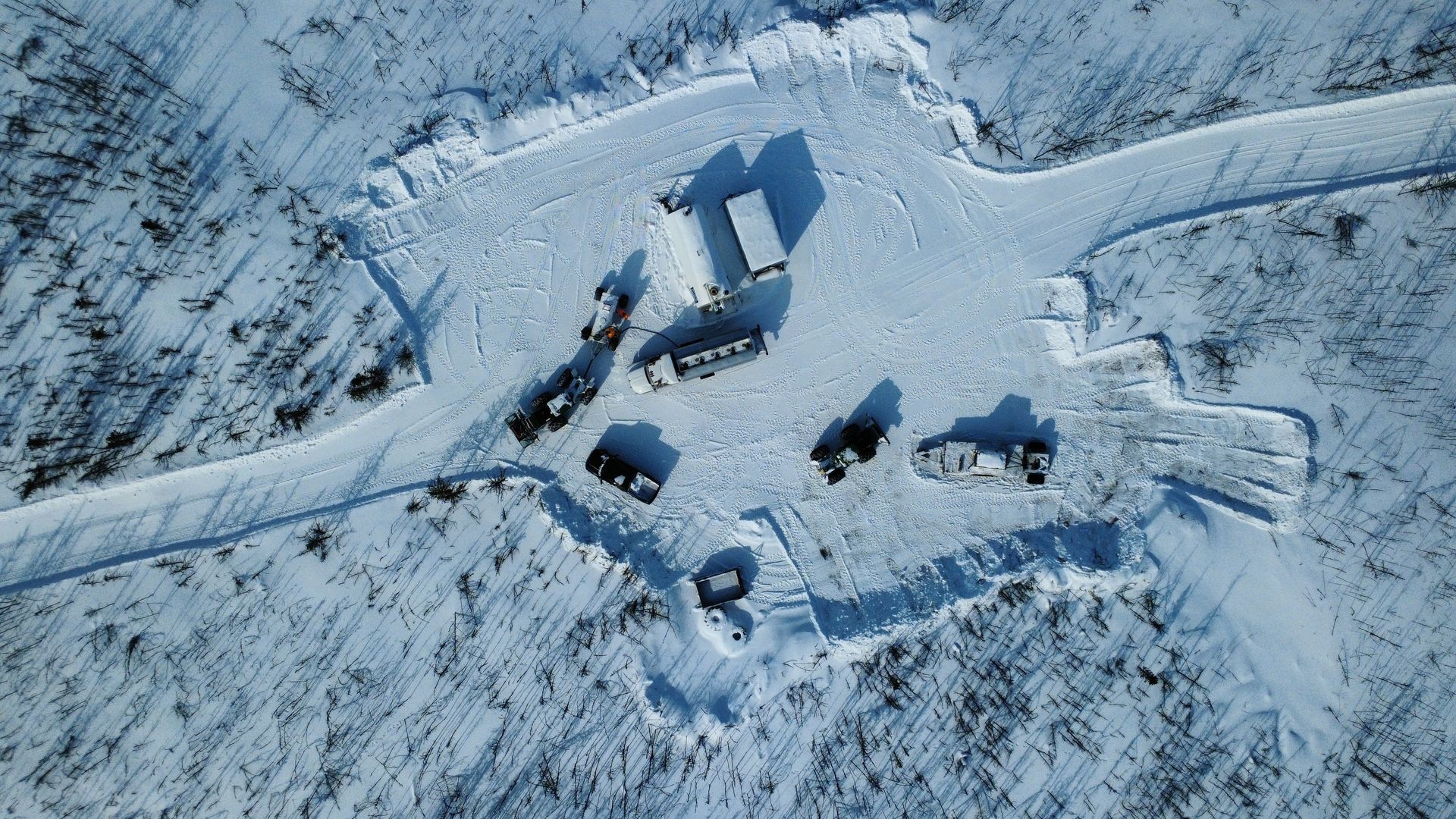
Execution represents a core differentiator for the Company in 2026. The organization is currently executing its largest-ever drill program at the Murphy Lake North property, following up on structural targets identified by advanced geophysical surveys and previous high-grade radiometric intersections.
Furthermore, exploration activities are expanding across the broader portfolio. On August 4, 2026, the Company announced the identification of new airborne radiometric anomalies at its 100% owned Aurora project. These anomalies have defined drill-ready targets, with inaugural drilling scheduled to commence in September 2026. Additional partner-funded exploration programs are advancing across the Darby and Astro projects, ensuring a robust pipeline of news flow.
Executive Commentary and Strategic Positioning
Commenting on the Company’s strategic positioning amidst favorable market fundamentals, Chief Executive Officer Keith Bodnarchuk stated:
"The structural deficit in the global uranium market underscores the critical need for new, high-grade discoveries in secure jurisdictions like the Athabasca Basin. By advancing our aggressive drill programs at Murphy Lake North and preparing for inaugural drilling at Aurora, the Company is methodically unlocking the value of our 237,000-hectare portfolio. Our technical team has a proven history of major discoveries, and with a strengthened balance sheet, we are fully positioned to execute on our operational milestones and deliver significant value to our shareholders."
Corporate Strength and Financial Runway Through 2027

Financial resilience is a critical determinant of success for exploration-stage equities. The Company recently cleared its final deferred consideration obligation to Denison Mines Corp., rendering the organization entirely debt-free. Supported by a successfully closed $12 million bought-deal financing, the Company maintains a robust treasury that fully funds planned exploration activities and corporate overhead through 2027.
In addition to direct corporate strength, strategic collaboration with major shareholder and joint-venture partner Denison Mines Corp. (DNN) provides profound technical, financial, and institutional backing. This partnership minimizes equity dilution while granting access to highly prospective regional datasets in the eastern Athabasca Basin.
About Cosa Resources Corp.
Cosa Resources Corp. (COSA) is a Canadian uranium exploration company headquartered in Vancouver, British Columbia, focused on the acquisition and exploration of high-grade uranium deposits in Saskatchewan's Athabasca Basin. Holding approximately 237,000 hectares across multiple 100% owned and joint-venture projects, the Company is led by an award-winning management team with a demonstrated track record of major discovery success in northern Saskatchewan. For more information, visit cosaresources.com.
Cautionary Note Regarding Forward-Looking Statements
This blog post contains forward-looking statements within the meaning of applicable securities laws. Forward-looking statements can frequently be identified by words such as "plans", "expects", "estimates", "intends", "anticipates", "believes", "scheduled", "budgeted", or variations of such words and phrases. Forward-looking statements involve known and unknown risks, uncertainties, and other factors that may cause actual results, performance, or achievements to differ materially from those expressed or implied. These statements include, but are not limited to, comments regarding future exploration plans, drill programs, timing of assay results, market fundamentals for uranium, and the adequacy of financial resources. Although the Company believes that the expectations reflected in such forward-looking statements are reasonable, undue reliance should not be placed on them. The Company undertakes no obligation to update forward-looking statements if circumstances or management's estimates or opinions should change, except as required by applicable securities law.